
'We are sure FY25 is going to be better...But to call out that all problems are behind us is a bit early.' 'The underlying business sentiment has not changed significantly.'
The Indian Army has been pitching for a faster disengagement process in areas like Hot Springs, Gogra and Depsang to bring down tension in the mountainous region.

Minister of State for Home Mullappally Ramachandran said there were 228 cases of transgression of the Indo-China border by the People's Liberation Army in 2010, 213 cases in 2011, and 64 cases till April 2012
The dedication of Indian soldiers and veterans towards the country is an 'exemplary example', Defence Minister Rajnath Singh said on Sunday soon after arriving in Ladakh on a three-day visit aimed at taking stock of India's military preparedness in the region in the face of a prolonged border row with China.

Esper said Beijing was trying to use the coronavirus tragedy to their advantage for 'propaganda purposes'.

Addressing the army personnel on the occasion of Army Day, Naravane reiterated that India has zero-tolerance against terrorism. "Abrogation of Article 370 is a historic step which will connect Jammu and Kashmir with the rest of the country. The decision has adversely affected the plans of western neighbour and its proxies. We have zero-tolerance against terrorism. We have many options to give a reply to terrorists and will not hesitate to use them," he said.
The force also stated that such incidents happen due to differing perceptions of the LAC and there are established mechanisms to resolve such differences.
There seems to be a desire for opacity when it comes to confronting China, points out Aakar Patel.
Claiming that its troops had 'never crossed' the Line of Actual Control with India, China on Tuesday said it always respected bilateral agreements on maintaining peace and tranquillity in border areas. "China's border personnel have been respecting the two agreements made between the two countries to maintain peace and tranquillity in border areas and have never crossed the LAC," Foreign Ministry spokesman Hong Lei told a media briefing in Beijing.

His statement comes amidst reports of Chinese soldiers crossing the Line of Actual Control last week after some Tibetans hoisted Tibetan flags on the occasion of Dalai Lama's birthday on July 6.

Skipper Rohit Sharma stressed on the Indian team's ability to win games on any surface including rank turners, following its record 434-run win over England on a flat track in Rajkot on Sunday.
Indian and Chinese troops had come face to face in Chumar area of Ladakh in July when the latter transgressed into Indian territory along the Line of Actual Control. Army sources said after the two sides came face to face in Chumar -- which is northeast of Leh in Jammu and Kashmir -- they both showed banners as per the agreed drills and returned to their respective positions peacefully.

Ministry of External Affairs (MEA) spokesperson Arindam Bagchi said China continues to deploy a large number of troops and armaments in the border areas and it was in response to Chinese actions that the Indian armed forces had to make appropriate counter deployments.

"Just three months more," says mom-to-be Deepika Padukone in a witty reply when asked if she is still in her character of a pregnant woman from her coming film Kalki 2898 AD.

The commander said the situation in the region has been stable and no major "changes or palpable shift of stance has been noted" even as the Indian and Chinese troops are engaged in a stand-off in Demchok and Depsang in eastern Ladakh.

Nepal said it was confident that both its "friendly neighbours" India and China will resolve their border stand-off at the Line of Actual Control through peaceful means.
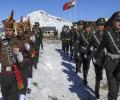
The two militaries are set to hold extensive talks on finalising modalities for restoring normalcy and bringing back peace and tranquillity in the region after the verification of the disengagement exercise is completed.

This is Gen Pande's first visit to the sector after taking over as the chief of the Indian Army on April 30.

After his statement, opposition leaders will speak and if required Singh may give a clarification, the sources said.

The two sides held diplomatic talks through video conference on the border standoff in midst of fresh details emerging that China has strengthened its position in several areas in eastern Ladakh including Galwan Valley where a violent clash on June 15 left 20 Indian soldiers dead.

Royal Challengers Bengaluru's IPL 2024 campaign is just one-match old, but it has already exposed their biggest chink. It's fragility in bowling, and they need better returns from bowlers against a confident Punjab Kings at an unforgiving M Chinnaswamy Stadium, in Bengaluru, on Monday.

People familiar with the development said on Friday that the Chinese envoy held wide-ranging talks with the external affairs ministry's point person for Afghanistan J P Singh.

'When we want to, we will be able to breach it, go across and strike when we need. This was the message we wanted to convey and we did'
India will establish a joint mechanism with China in the next few months to resolve border issues while taking steps to modernise its military infrastructure in the face of Beijing "aggressively" shoring up its defence set up along the Line of Actual Control, Defence Minister A K Antony said on Tuesday.
"Government is aware that China is developing infrastructure in border regions opposite India in the Tibet and Xinjiang autonomous regions," Minister of State for External Affairs Preneet Kaur told Rajya Sabha.
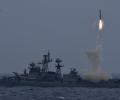
BrahMos Aerospace, an India-Russian joint venture, produces the supersonic cruise missile that can be launched from submarines, ships, aircraft, or from land platforms.
After remaining peaceful for most of the year, Chinese troops entered Indian territory in the fag end of 2010 along the Line of Actual Control in south-eastern Ladakh region and threatened a contractor and his team to halt work on constructing a 'passenger shed'.
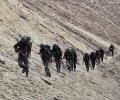
The Army on Tuesday said it was prepared to give an appropriate response to any adverse aggressive designs of China in the Ladakh sector, maintaining that the integrity of the country was being ensured through physical patrolling and technical means.

India and China on Friday are holding another round of high-level military dialogue to resolve the 22-month-long standoff in some friction points in eastern Ladakh, two months after the last round of such talks failed to yield any significant outcome.
Chinese intrusions have been noticed in the past "two years" along the Line of Actual Control in Ladakh, Uttarakhand, Sikkim and Arunachal Pradesh, Rajya Sabha was informed on Wednesday.
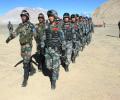
Singh said a meeting between senior Indian and Chinese military leaders has been scheduled for June 6 even as he asserted that India is not going to back off from its position. Asked about the current situation in sensitive areas in eastern Ladakh, he said Chinese have come up to what they claim is their territory while Indians believed it is theirs.

External Affairs Minister S Jaishankar on Thursday asserted that India's relationship with China cannot be normal unless there is peace in the border areas and there is no ambiguity in New Delhi's signalling to that country.
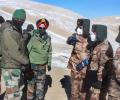
'China and India have encountered some setbacks in recent years which do not serve the fundamental interests of the two countries and the two peoples'
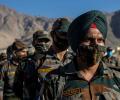
A joint statement released on Thursday said both sides exchanged views in an 'open and constructive' manner to resolve the 'relevant issues' and that it was agreed to maintain 'security and stability' on the ground in the region.
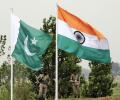
'When the Indian Army carries out anti-infiltration ops, the Pakistan army willy-nilly will get involved in some way. So, it is imperative for the Pakistan army to act against militant groups.'

'When armies start attacking with clubs and batons, then at some point this can take an escalatory spiral and spin out of control.'
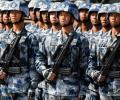
Asked about the continued tensions along the border and whether the PLA troops action was anyway related to the disagreements with the Indian government's plan to lure business out of China, Chinese Foreign Ministry spokesman Zhao Lijian said both the countries were in diplomatic contact over the face-off between their troops.

Chief of Army Staff Gen Manoj Pande has carried out a comprehensive review of India's military preparedness along the Line of Actual Control (LAC) in Arunachal Pradesh in his first visit to the border state after last month's clash between Indian and Chinese forces in the Tawang sector.
The Jammu and Kashmir government has sought clearance from the ministry of defence to construct concrete huts like along the Line of Actual Control bordering China.
